Rural
31 March, 2026
District vet shares knowledge on foot health of sheep
Local landholders and members of staff from Local Land Services (LLS) attended Moss Vale property ‘Colyersleigh’ on Friday morning to learn more about causes, treatment and prevention of a wide range of common foot health issues sheep and goat farmers may be seeing in their flocks.

Local landholders and members of staff from Local Land Services (LLS) attended Moss Vale property ‘Colyersleigh’ on Friday morning to learn more about causes, treatment and prevention of a wide range of common foot health issues sheep and goat farmers may be seeing in their flocks.
Goulburn – based district veterinarian for the LLS, Amy Underwood, told The Southern Wire it was a great opportunity to share her knowledge and meet up with local farmers and hear their questions and concerns.
The diseases Ms. Underwood spoke about in her presentation included Caprine Arthritis Encephalitis (CAE), also known as ‘big knee’ which mainly affects goats; overgrowth and ‘shelly toe’ (also known as ‘white line’ disease) which can affect the hooves of sheep, allowing dirt and faeces to get packed in the crevices of their hooves and also predisposes them to toe or heel and foot abcesses.
Other diseases mentioned included inter-digital dermatitis, laminitis, strawberry footrot, and even (in extreme cases) Foot and Mouth Disease.
“I thought the day was a great opportunity for the district vets to share our knowledge around the causes, treatments and prevention of a wide range of common foot health issues that local sheep and goat farmers may be seeing in their flocks,” Ms. Underwood said.
“The goal was for all farmers that attended to walk away with a more in depth understanding and increased confidence in recognising common foot diseases. The event also raised awareness amongst the farmers that they can contact their local district veterinarian if they have concerns about particular diseases they may be seeing in their livestock.”
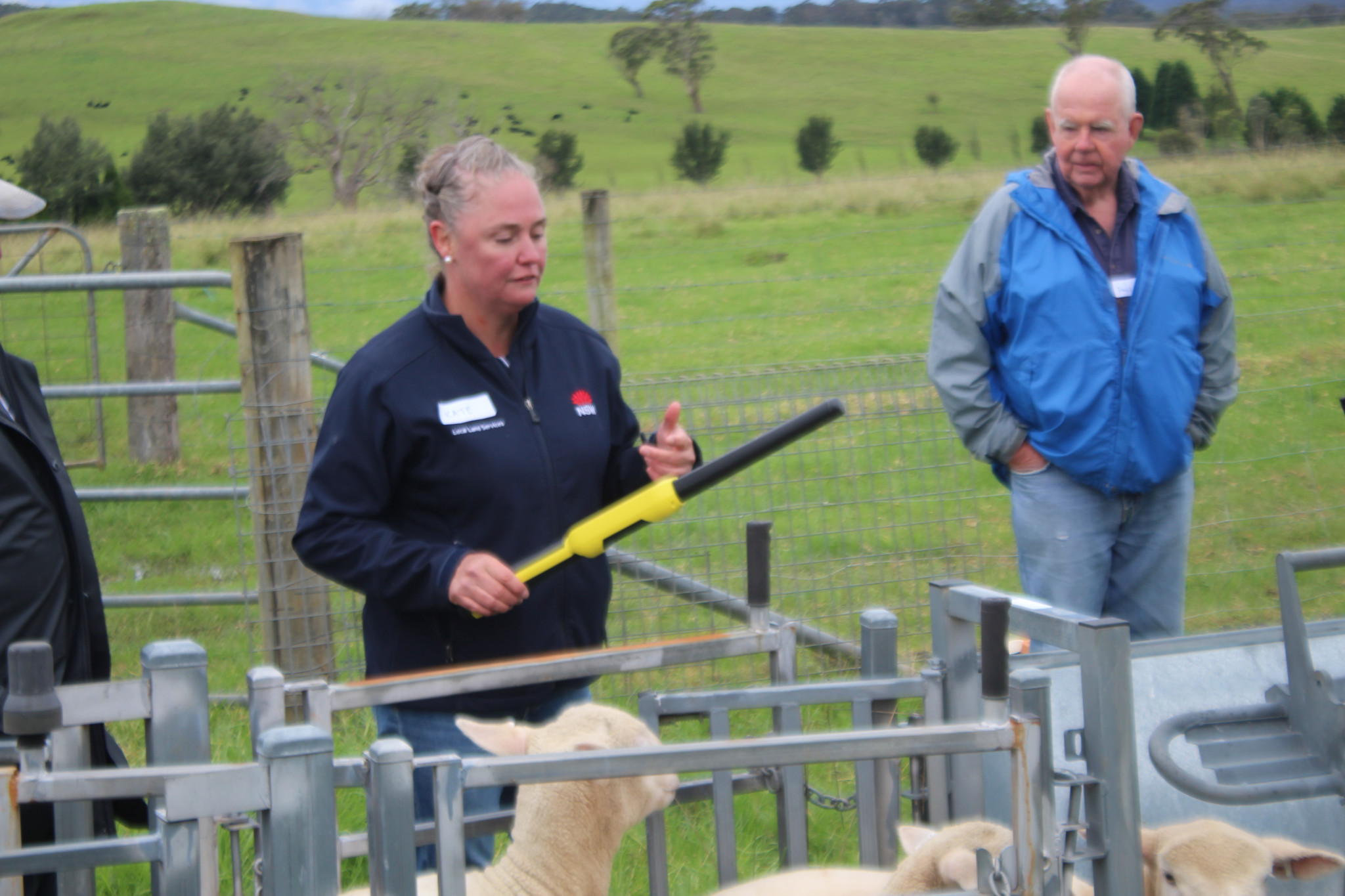
Senior Biosecurity Officer – Sheep & Goat eID for South East Local Land Services Agency and the Department of Primary Industries and Regional Development (DPI & RD), Kate Mitchell, also attended to notify farmers about the use of electronic tagging of sheep and goats and the regulations behind this.
“The rules are changing in NSW and apply to ALL sheep and goats owned by producers, hobby farmers and pet owners,” Ms. Mitchell said.
“Under the Biosecurity (NLIS) Regulation 2017, all sheep and goats born from the 1st January 2025 must have an individual electronic identifier (eID) tag when they leave their property of origin.
“The property must have a Property Identification Code (PIC), and a movement document must accompany the animals when they are moved or sold to a new property. This may be for the purpose of sale, slaughter or even on loan to the neighbour or local Ag Show. Even if it is just one sheep or goat, the tag information needs to be recorded, and the movement must be uploaded to the National Land Information Service (NLIS) database.
“From the 1st January 2027, it will be mandatory for ALL sheep and goats, regardless of their age, to have an individual electronic tag (eID) when they leave their property of origin.
“An eID tag has an internal microchip and is printed with a unique serial number (NLIS ID) and the NLIS logo.
“Tags can be ordered from your local rural store or online. While the rules are the same for sheep and goats, the tag is NOT the same.
“The serial number on the eID tag will define whether the species is a sheep or a goat, so make sure when you are ordering tags that they are specific to sheep or goats.”

Read More: Moss Vale, Southern Highlands