News
18 November, 2025
Barnsey bares his soul - again
For years we have claimed Jimmy Barnes as one of our own. A Southern Highlander. A celebrity in our midst. But Jimmy Barnes has lived a life that few of us could truly understand. It’s a life that even his children acknowledge they never fully understood.
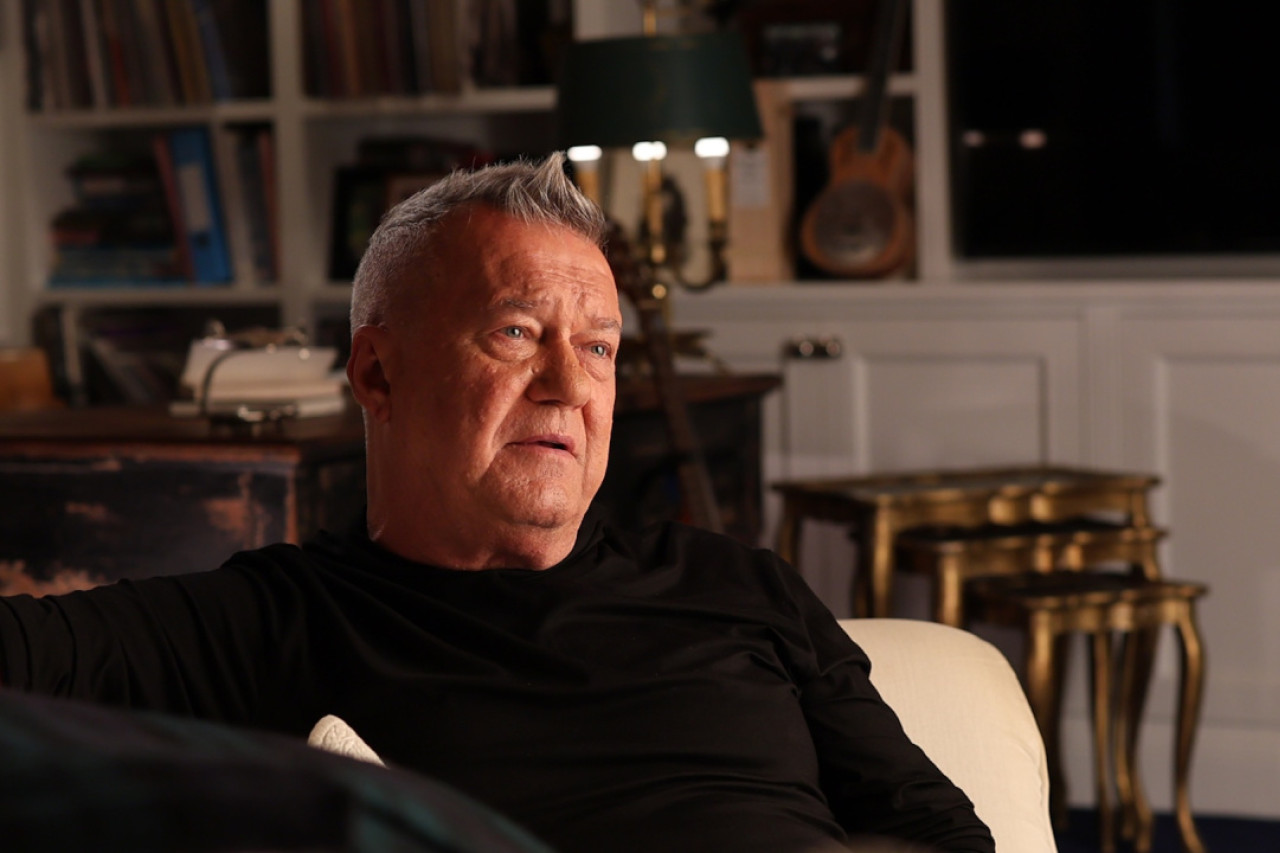
For years we have claimed Jimmy Barnes as one of our own. A Southern Highlander. A celebrity in our midst.
But Jimmy Barnes has lived a life that few of us could truly understand. It’s a life that even his children acknowledge they never fully understood.
Now they have heard the full story, daughter Mahlia says she is surprised her father is still alive.
“He’s very lucky to be here.”
Son David Campbell says his father could have been a statistic.
“He should have been a statistic.”
Barnes – the frontman for one of Australia’s greatest rock bands, Cold Chisel – opened up in a documentary aired on Channel 7 on Monday night.
Barnes has written previously written about his troubled childhood in his award-winning autobiography ‘Working Class Boy’ and its follow-up, ‘Working Class Man’.
He spoke candidly about his life-long struggle with addiction in Monday night’s documentary, also titled ‘Working Class Man’ after the song that has defined his post-Cold Chisel solo career.
“My childhood was one big storm and I was always looking for shelter,” Barnes says in the documentary.
The memories he spent most of his life trying to repress – primarily through alcohol abuse – included violence, sexual assault and abandonment.
“It wasn’t until I faced the pain head-on that things started to change,” Barnes says.
Barnes and family spent many years living on Mt Gibraltar at the height of his solo career but was forced to sell the home – complete with its own recording studio – due to financial problems.
He now lives in a home near Berrima alongside the Wingecarribee River. He invited the nation into his home every night during COVID 19 when he and wife Jane decided to record a new song every day to help people deal with the isolation that was part and parcel of the COVID lockdown.
Barnes is still as well known for his wild ways as Cold Chisel’s frontman as he is for his solo success and his contribution to Australian music.
His brutal and at times confronting honesty about his childhood and his struggle with addiction means he will also leave behind an entirely different legacy.
Son David says that by talking and writing about his own troubled past, Barnes has given men everywhere permission to feel vulnerable and to cry.
Campbell says that legacy, on its own, will be “profound”.
Barnes says he first started running from his past when he left Adelaide in the back of a van with members of a band that he had only recently joined, Cold Chisel.
They headed to Armidale where keyboardist and chief songwriter Don Walker was studying quantum mechanics.
“It was like a whole new world for me,” Barnes says of Armidale.
But life with his ‘band of brothers’ enabled him to let his guard down for the first time. He admits that life in Armidale provided him with the only peace he would know for decades.
After returning to Adelaide, the band relocated to Sydney and its first hit single ‘Khe San’ followed soon after.
Barnes describes the song, written by Don Walker, as a “piece of art”.
“Fifty years on and I’m still singing it,” he says.
Even in early the years Barnes was drinking heavily to repress childhood memories and to control his nerves.
“I was out of control and that’s what people were coming to see,” he says.
At the time the band was performing about eight shows a week for little return.
“There was nothing much in our bellies or our pockets,” he recalls.
Barnes says cracks first started to appear in the band when he met wife-to-be Jane, the stepdaughter of an Australian career diplomat and his Thai wife.
“I would go away on tour and I would just want to be with her,” he says.
Jane says the rock and roll lifestyle wasn’t one she was used to and describes life with Barnes at the time as ‘toxic’.
She went to Japan to live with her parents, prompting Barnes to write another Cold Chisel classic, ‘Rising Sun’.
The song’s lyrics include the line ‘The Rising Sun just stole my girl … I’m gonna catch a plane and steal her back again”.
Barnes caught a plane and recalls arriving at the Australian embassy “smelling like a brewery”.
“It was like two world’s colliding …. I wasn’t of that world,” he says.
He returned to Australia and Jane eventually decided to “give things a go” and to get married.
She describes Barnes as a “kind and gentle” person and someone she felt comfortable being with.
Cold Chisel released its next album, the multi award-winning ‘East’, and tried cracking the tough US market.
Cold Chisel released its next album, the multi award-winning ‘East’, and tried to use it as a stepping stone into the tough US market.
“When things start to go really well, that’s when they start falling apart,” Barnes says.
There was only one way for things to go.
He describes the failed US tour as one of the first nails in Cold Chisel’s coffin.
The band produced ‘Circus Animals’ after returning from the US, but the cracks that grew even wider on the US tour grew cavernous during a tour of Europe.
During one show in Germany, keyboardist Don Walker pushed his instrument to the ground out of frustration with the band.
Barnes describes the act as ‘momentous’ given Walker had always been the band’s calming influence.
The band returned to Australia and decided to call it quits. They produced a final album – Twentieth Century – and embarked on their Last Stand tour.
The album featured one of Cold Chisel’s most iconic songs, ‘Flame Trees’.
Barnes says he knew how bad things had become when he saw the film clip for Flame Trees and realised he wasn’t in it. They had made the clip without him.
By this stage Barnes says his drinking was growing steadily worse and he was taking speed to keep on his feet. His band of brothers was gone.
“It was like staring into an abyss and I was terrified.”
His first solo album ‘Bodyswere’ produced the hit ‘No Second Prize’ while his second album ‘For the Working Class Man’ cemented his reputation as a solo artist.
The title song was written by Journey keyboardist Johnny Cain and 40 years on is still regarded as Barnes’ signature song.
He admits that he was drinking so heavily at the time that he thought he would ‘self-combust’ filming a scene for the film clip in front of a burning sugarcane field.
Despite his success Barnes says he was still plagued with feelings of inadequacy. He was also juggling his career as a successful solo artist with his growing family commitments as children Mahlia, Jackie, EJ and Ellie-May arrived.
Barnes says everything he touched after releasing ‘Soul Deep’ in 1991 “turned to platinum” but his life was “going down the gurgler”.
“I didn’t think I deserved anything.”
He admits that he was so drunk and drug-affected when he performed at the closing ceremony for the Sydney Olympics in 2000 that he can hardly remember doing it.
Barnes’ healing process started after a failed suicide attempt in a New Zealand hotel room, trips to rehab and a psychiatrist and eventually his first autobiography and the speaking tour that followed.
He acknowledges now that men simply have trouble talking about personal problems and describes his own way of dealing with repressed childhood trauma as the “longest public suicide in Australian music history.
Barnes, now 69, has a simple message for other men who are struggling.
“There’s no point where it’s too late …. where you can’t make things better.”
Barnes has undergone two heart surgeries and two hip replacements but says he is “ready to rock for another 20 years”.
Most importantly he has found his happy place with the help of his loving wife and family.
“I used to write about running away … now I can write about coming home,” he says.
And would he do it all again?
“As painful and as horrible as it has been, I wouldn’t change a thing”.
· Jimmy Barnes will be performing at Centennial Vineyards on March 28 next year as part of his Working Class Man 40th anniversary tour.
If you or someone you know is in need of support, please call Lifeline on 13 11 14, or call the Mental Health Line on 1800 011 511.
Read More: Berrima, Southern Highlands