Opinion
18 January, 2026
Macquarie Pass: past its use-by date?
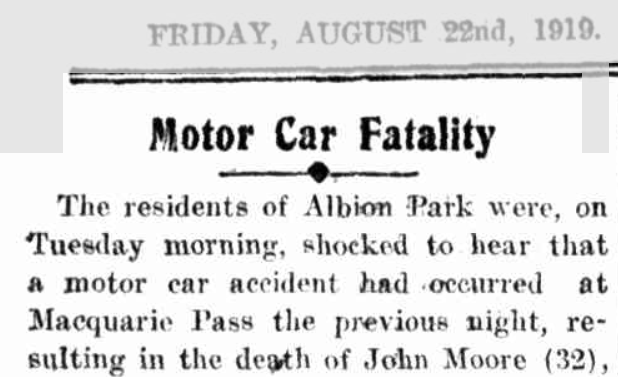
“Motor car fatality,” screamed the headline. “The motor car had dropped down the embankment, it had rolled on its side, one stump penetrated the side of the car, and the deceased was pinned to the wall of the car.”

“Motor car fatality,” screamed the headline.
“The motor car had dropped down the embankment, it had rolled on its side, one stump penetrated the side of the car, and the deceased was pinned to the wall of the car.”
That report appeared in The South Coast Times in 1919, following the death of John Moore, aged 32.
A coronial inquiry into Moore’s death found the council should fence sections of the road, describing it as “positively dangerous in its present state”.
More than a century later, the same words could still be written about the Macquarie Pass.
Moore is one of many who have lost their lives on what is widely regarded as one of Australia’s most dangerous stretches of road. Macquarie Pass is a 14-kilometre ribbon of narrow, winding bitumen connecting the Southern Highlands to the Illawarra, carved through steep terrain and packed with hairpin bends. It was opened in 1898 — 128 years ago.
In July 2007, ABC Illawarra reported a 37-year-old man was killed when his motorcycle collided with a ute on the Pass. Police described the crash as occurring on a “slight bend”.
In November 2012, The Illawarra Mercury reported Macquarie Pass had been labelled a black spot after 144 crashes and six deaths in the preceding five years. Sixty per cent of crashes occurred in wet or overcast conditions. Eighty per cent occurred on bends. Motorcycle riders were identified as a particular concern.
In December 2017, the Southern Highland News reported a woman was fighting for her life following a collision involving a motorcycle on the Pass.
In July 2023, 7News reported another fatality — a 20-year-old motorcyclist who suffered severe head injuries and died at the scene.
In November 2024, Radio 2ST reported another serious crash involving a motorcyclist.
In March 2025, the Illawarra Mercury described the road as “ancient”, noting residents’ concerns about incidents occurring “nearly every week”.
These are but a few examples of the tragedy of 'The Pass'.
In April 2025, I spent time with WIN News outlining concerns about the Pass, the ongoing risks, and possible solutions. Immediate measures I proposed, included additional guard rails and lane widening, alongside a longer-term question: is it time to build a modern alternative route altogether?
How many deaths are acceptable? How many accidents are acceptable? How much longer should the community accept Macquarie Pass as the primary route between the Southern Highlands and Wollongong?
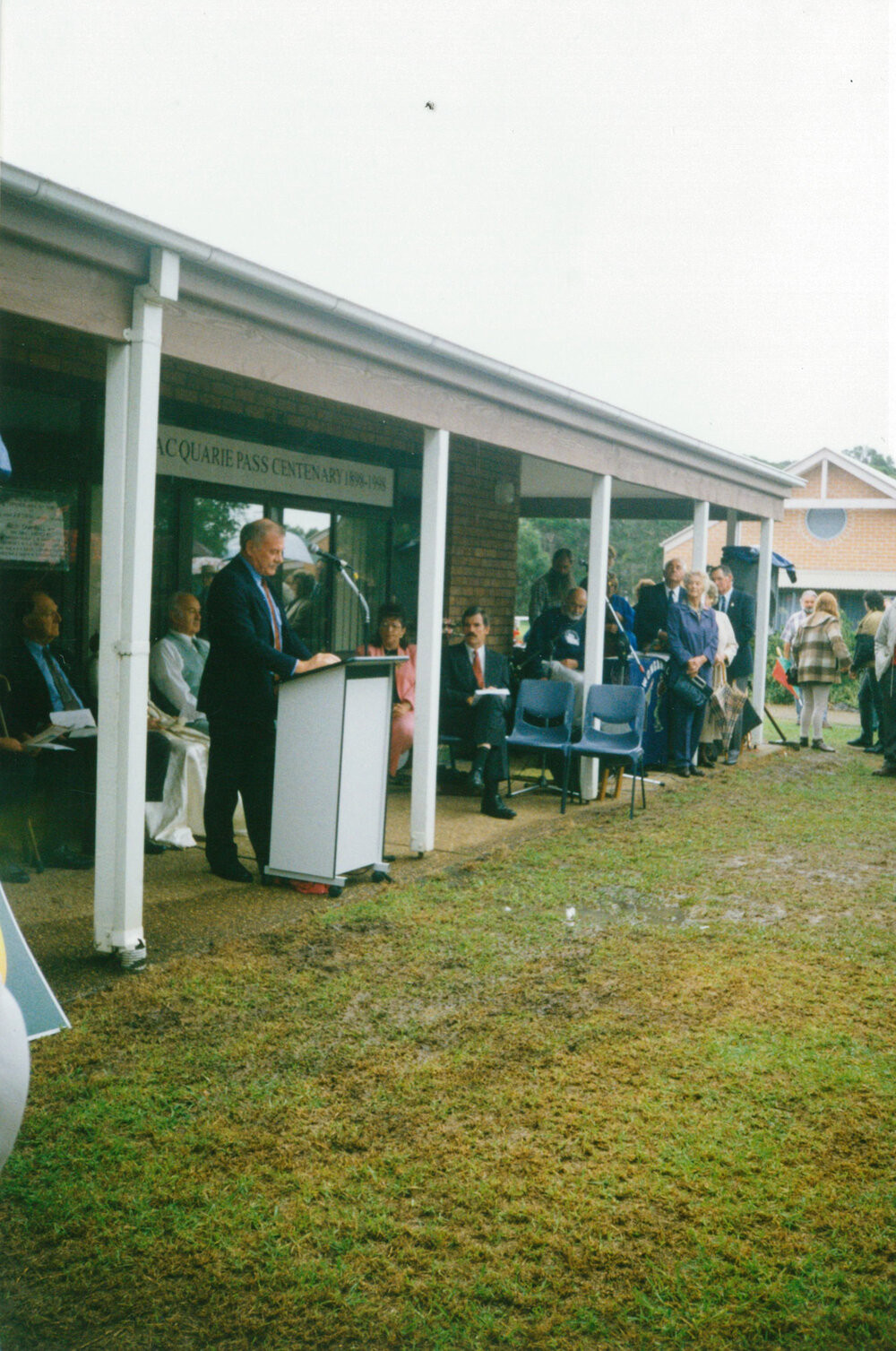
Former Labor MP for Throsby, Colin Hollis, who held the seat for 17 years until 2001, advocated for decades for an alternative route between the Highlands and the Illawarra. One proposal was the Caloola Pass — a concept examined in the 1980s before quietly disappearing. That proposal garnered support from former leader of the opposition, and highlands local, John Hewson.
While there has been ongoing spending on Macquarie Pass, it increasingly feels like a series of temporary fixes on a fundamentally unsafe road. A temu band aid?
In September, Premier Chris Minns announced $9.6 million in works for the Pass. As a regular driver, the most noticeable change so far appears to be tree clearing to improve visibility.
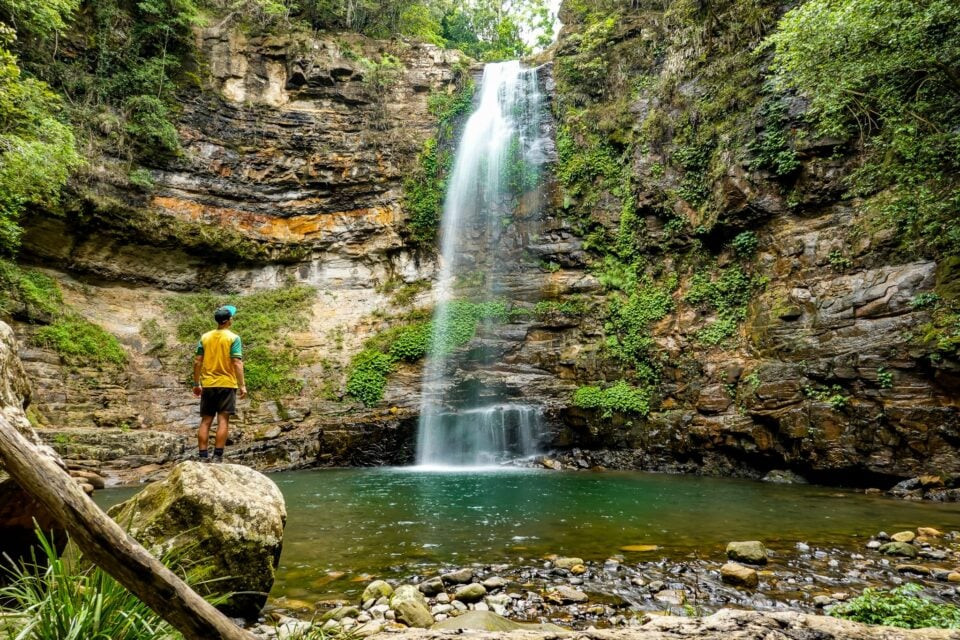
In 2025, the road was closed at night for two months to construct a turning lane into Clover Hill Road, about halfway up the Pass. At the time, a state government spokesperson said the works would allow the community to access “beautiful walking trails and waterfalls as safely as possible”. On its own, terrific! Our wonderful national parks are a huge tourist attraction, and more should be done in that space.
There is now a turning lane into Clover Hill Road — but it leads to a small, unsealed car park. Priorities matter!
Even when that project was announced, NSW Roads Minister Jenny Aitchison acknowledged the work was complex due to steep terrain, slope instability and tight work areas restricting machinery and workers. Hmmm, not ideal for thousands of road users.
Those same constraints apply every day to the more than 5,000 vehicles that use the Pass.

Yesterday, NSW Police confirmed another tragedy. A 48-year-old woman died when a large tree branch fell through the windscreen of a vehicle near Clover Hill Road. A man in the passenger seat and two children in the back of the car were thankfully not physically injured.
Think about how often you, your family, friends or colleagues use the Macquarie Pass.
Each incident represents lives lost or permanently altered. Families changed forever.
We can do better. We must do better.
Those in high office will not ultimately be judged by how many shows, markets or events they attend, but, by whether they confront difficult, long-term problems affecting community safety.
If repeated tragedy is not motivation enough, then the economic argument should be. Safe and efficient movement between the Highlands and the Illawarra must improve, for business, employment, tourism and emergency response.
Real change is unlikely to come from those in power without pressure. It comes from communities refusing to accept “that’s just how it is”.
One more death is one too many.
Read More: Southern Highlands, Robertson