News
20 December, 2025
Council adopts new Code of Meeting Practice, Public Forum Policy
Concerns over livestream editing and the ability of Wingecarribee Shire councillors to ‘comprehensively’ represent the community through Notices Motion have continued to dominate debate
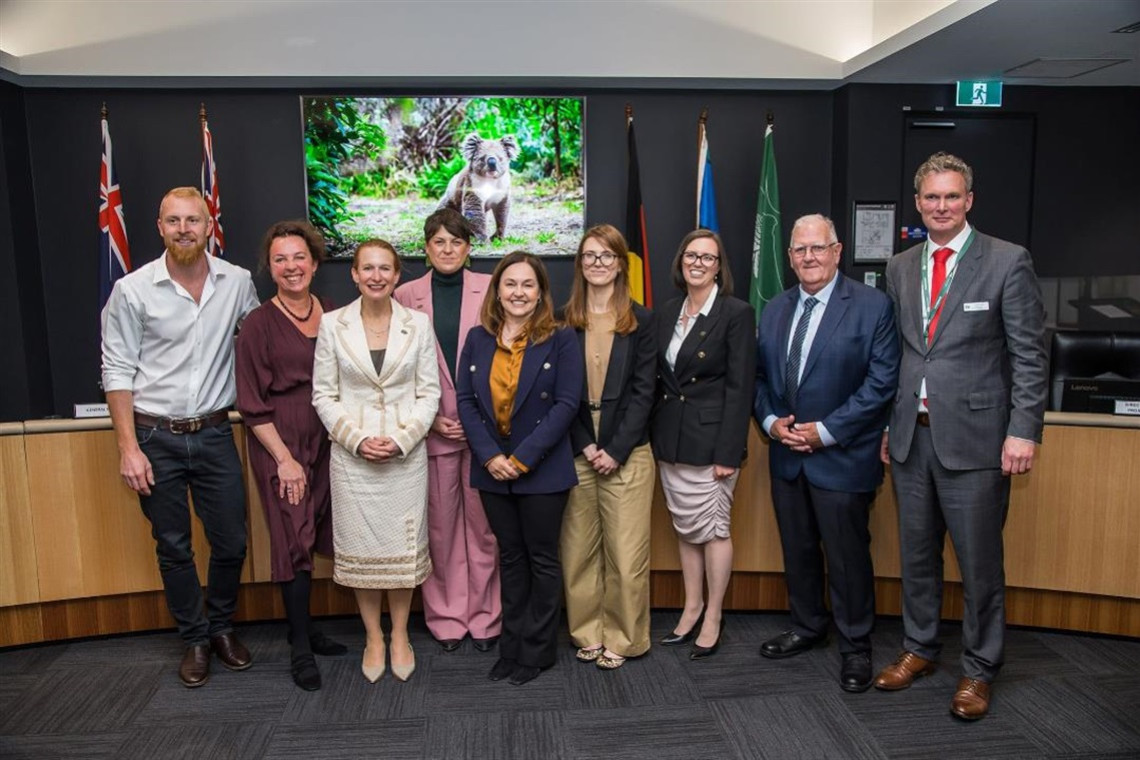
Concerns over livestream editing and the ability of Wingecarribee Shire councillors to ‘comprehensively’ represent the community through Notices Motion have continued to dominate debate over council’s new Code of Meeting Practice and Public Forum Policy.
Both documents were adopted at council’s December meeting.
Cr Rachel Russell moved an amendment to the staff recommendation that would have lifted the restriction on the number of Notices of Motion councillors are able to submit for each meeting.
She also sought to limit council’s ability to edit the livestream recording of council meetings “unless there has been legal advice sought that any part of the proceedings could expose council to defamation proceedings with a significant cost associated and that all parties affected by the edited recording are able to access that on request”.
Cr Russell said there had been a ‘significant’ number of submissions relating to livestream editing when the draft Code of Meeting Practice and draft Public Forum Policy were placed on public exhibition.
“We are here to engage as community representatives in a transparent and responsible manner,” Cr Russell said.
“I think that the fact that the livestream recording can’t be edited means that we have accountability – everyone has accountability in that space.
“Should someone say something that leaves us in a position where there could be legal proceedings, well that is a matter for the courts,” she said.
The Office of Local Government’s Guide to Webcasting Council and Committee Meetings (2020) provides that webcast recordings may be edited after a meeting only to remove content that is unsuitable for public release or that may create legal risk, with the general manager responsible for determining when such edits are required. Any alterations must also be disclosed on Council’s website where the recording is published.
Cr Russell also argued that councillors shouldn’t be limited to one Notice of Motion per meeting.
“We don’t want to limit our representation or our ability to lead this council,” she said.
“We need to steadily steer this ship back to governance in government.
“We need to be able to represent our community comprehensively for the short time we are here.
“This is about the quality of our work,” Cr Russell said.
Cr David Kent said there had ‘often’ been more than one Notice of Motion per month from a councillor and because they hadn’t been discussed with other councillors they were usually voted down.
“If an individual councillor is feeling constrained by the ability to put a single Notice of Motion in, they can always discuss it with their fellow councillors and find someone who supports their idea (to) put it in,” he said.
Cr Kent said this would demonstrate “good governance and teamwork”.
Cr Sara Moylan disagreed.
“I don’t accept that concept,” she said.
“We need to work as councillors who are elected representatives of the community and to do that we need to be able to bring Notices of Motion to council meetings on their behalf.”
Cr Moylan said councillors shouldn’t be discussing their Notices of Motion with other councillors before a council meeting.
She said the Local Government Act “very clearly stipulates” that meetings must be open “and that any meetings outside of these meetings are strictly prohibited”.
Cr Moylan said she was “strongly in favour of open democracy and the ability for councillors to discuss their Notices of Motion in open view”.
Cr Erin Foley spoke against Cr Russell’s amendment.
She said the Office of Local Government provided some “good safeguards” around how a livestream recording can be edited and the notification requirements if this happens.
She said the original recording could not be wiped out or destroyed and would still be able for those people wanting to access it through a Government Information Public Access (GIPA) request.

She said council needed to be able to act quickly if information “accidentally slips out” in a council meeting that could be defamatory or could cause personal harm to somebody – for example the address of a women’s shelter.
“The ability to act quickly to remove that from the public record is actually really important,” she said.
Cr Moylan said the GIPA process was “not easily accessible”.
Cr Russell’s amendment was lost and the original staff recommendation, moved by Cr Nicole Smith and seconded by Cr Foley that the Code of Meeting Practice and Public Forum Policy be adopted, was carried.
The only change was the inclusion of a definition of ‘misrepresentation’ in the Code of Meeting Practice.
According to the definition, misrepresentation means a councillor “has described, summarised, or repeated another councillor’s words in a way that is incorrect, improper, or false”.
Read More: Southern Highlands